isTyme Local Work Marketplace
The power of minimal, in a marketplace rooted in the local and the human. One app for hiring and for finding work, in English and in Karachi Urdu.
-
47screens
Eight flows, from first open to a finished job, in each language
-
2languages
English, and Karachi Urdu mirrored right to left
-
1accent
Saffron, for fills and decoration, never for text
The problem
isTyme connects people who need something done with skilled people nearby: plumbers and electricians, home cooks and tailors, tutors and freelancers. Hiring and working live in one app, switched at the top of the home screen.
Both sides have to trust a stranger. A customer is letting someone into their home; a worker is giving their time before being paid. And many people on both sides are more at home in Urdu than in English, and not used to apps.
Constraints
- Every screen works in English and in Urdu, with the same components.
- Workers verify their CNIC before they can send an offer. There is no skip, including for a customer who switches to worker mode.
- Digits, prices, phone numbers, the status bar and the CNIC frame stay left to right in Urdu.
- Money is held until the customer confirms the job is done.
Decisions
Version 5.1 kept the components and the behaviour, and took everything else down to what one person needs on one screen.
01 One job per screen, one accent
A white canvas, ink for text and primary buttons, isTyme green for money and success, and saffron as the single vibrant accent. Saffron fills and decorates; when it has to be read, a darker saffron keeps it at AA.
02 Write Urdu the way Karachi speaks
Not textbook Urdu: the English words people actually say, in Urdu script, like پیمنٹ for payment and کنفرم for confirm. The English line comes first with Urdu under every heading and key button, and money always gets reassurance: پیسے محفوظ ہیں، ٹینشن نہ لیں.
03 Mirror it, don't just translate it
In Urdu the layout, arrows, progress bars, tab bar and chat bubbles flip. Prices, phone numbers, the keypad, the wordmark and the card frame don't. Nastaliq is set about 15% smaller with taller lines, so it fits the same components.
04 Show what a fair price is
When posting a job, the customer sets a price or asks for offers, and the local range sits under the number. Offers come back ranked, with rating, jobs done and distance, and one clear way to hire.
05 Trust starts at verification
Card front, card back, a selfie and a thumbprint check with a NADRA partner. When a photo won't read, the frame turns red and the fix is named in both languages: too much light on the card.
06 One motif, used sparingly
Proximity rings, for people near you: hairline circles, a dotted outer ring and a single saffron arc. Only on welcome, location, success and empty moments, and never behind text.
Try it
These are the real screens from the design file. Pick a side of the marketplace and swipe through. Then switch to Urdu: every screen mirrors and the flow runs right to left.
-
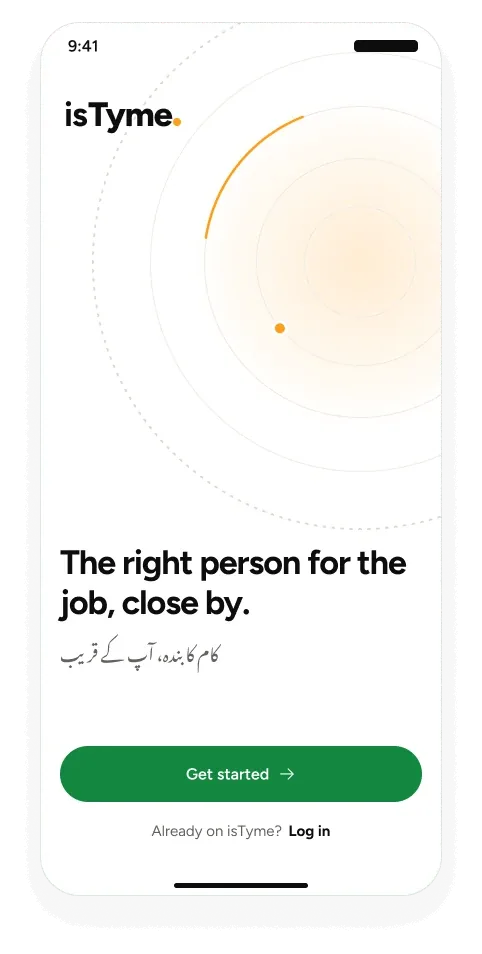
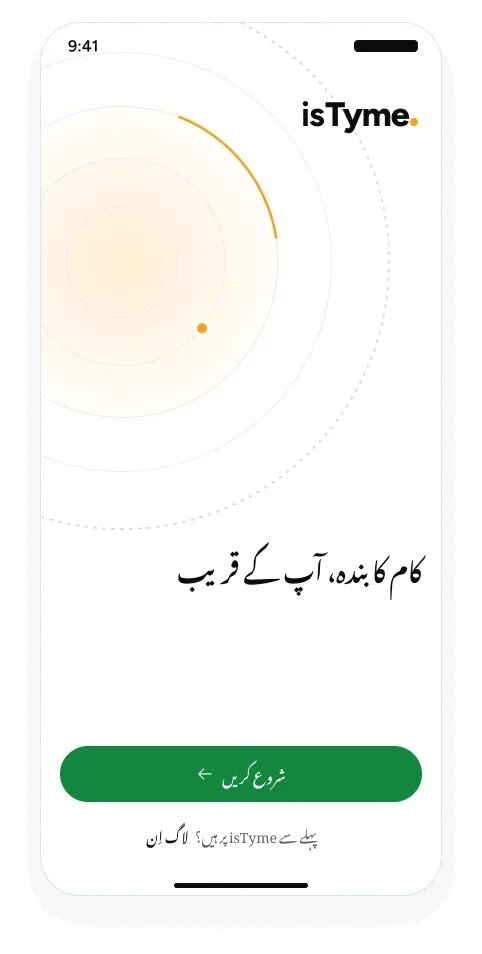
01 Welcome The right person for the job, close by. The rings are the app's one motif: people near you. -
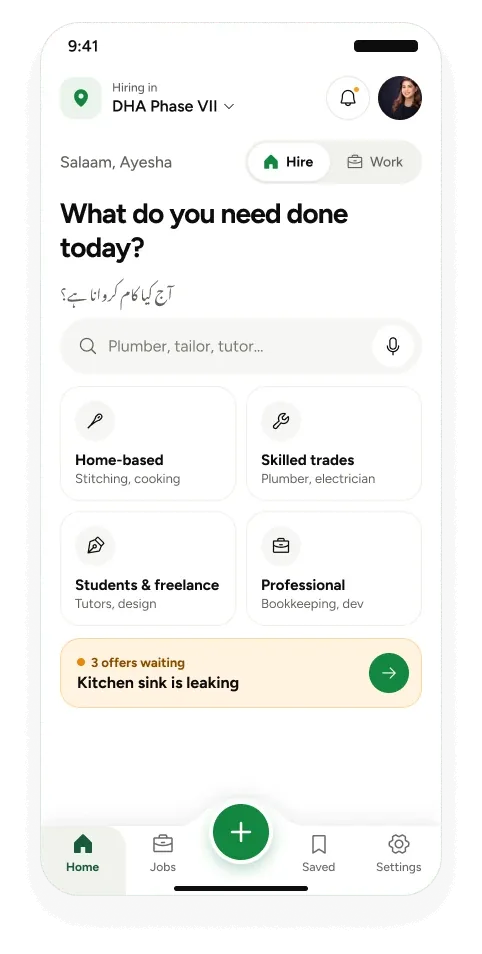
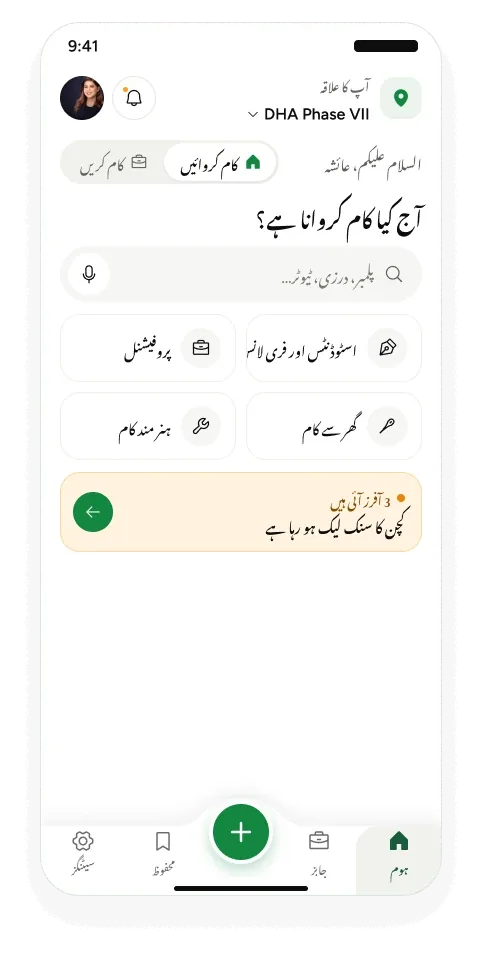
02 Home Hire and Work are one switch apart. Four plain categories, and waiting offers rise to the top. -
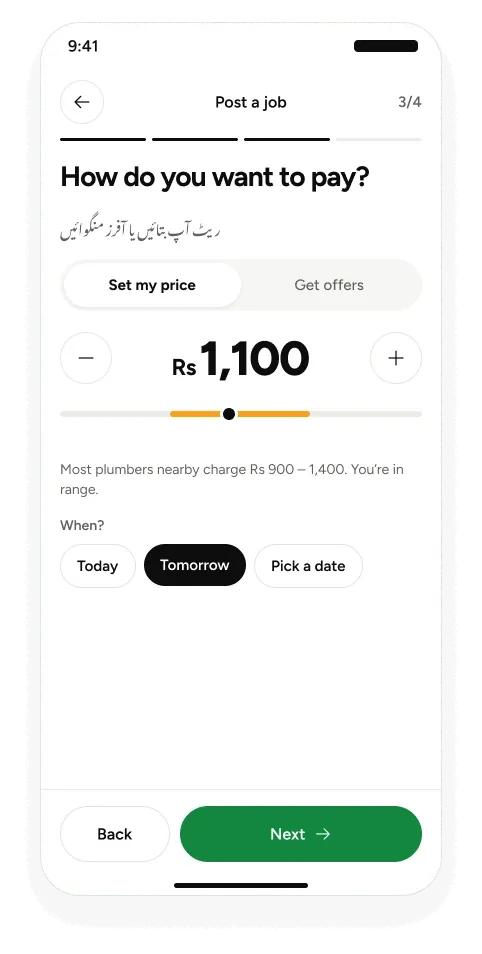
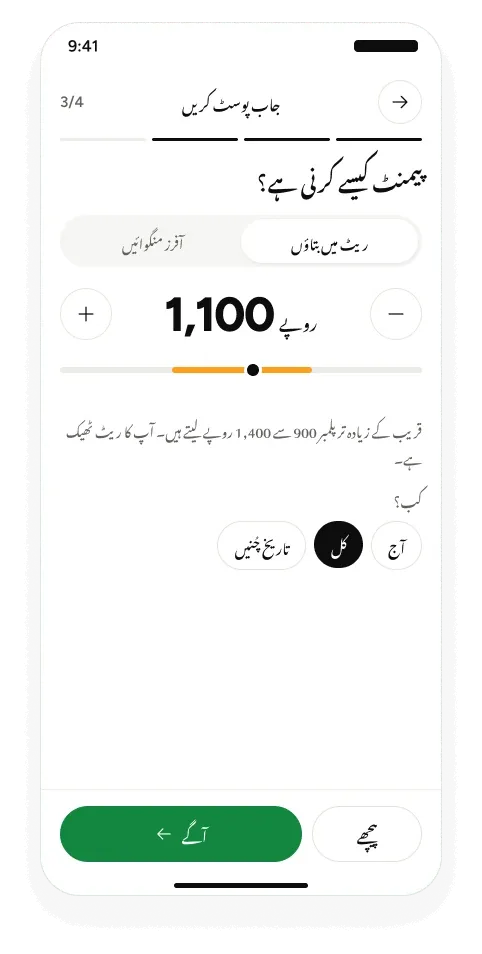
03 Set a price Set a price or ask for offers. The local range sits under the number, so a fair price is easy to find. -
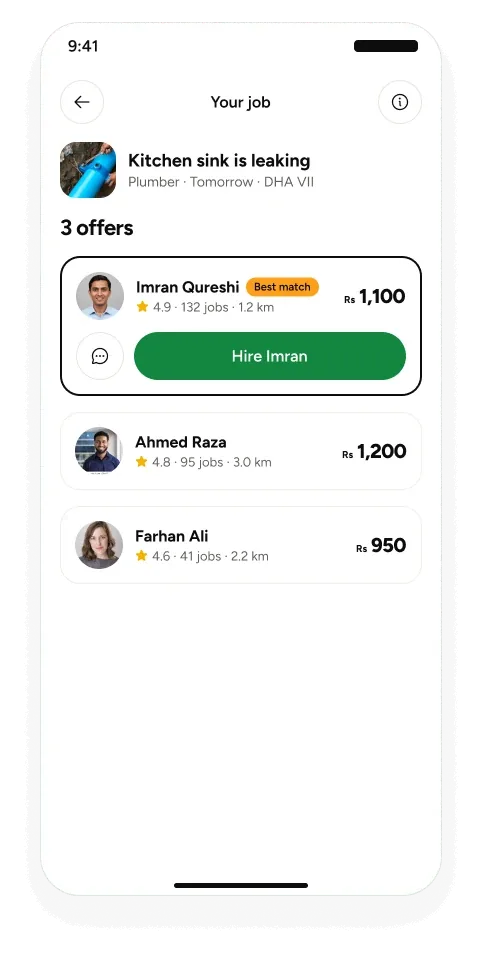
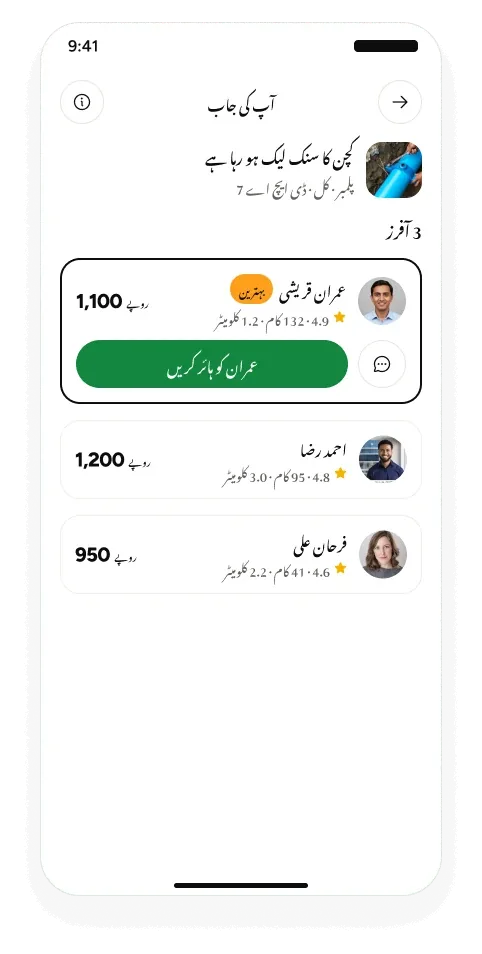
04 Offers Best match first, with rating, jobs done and distance. One clear way to hire. -
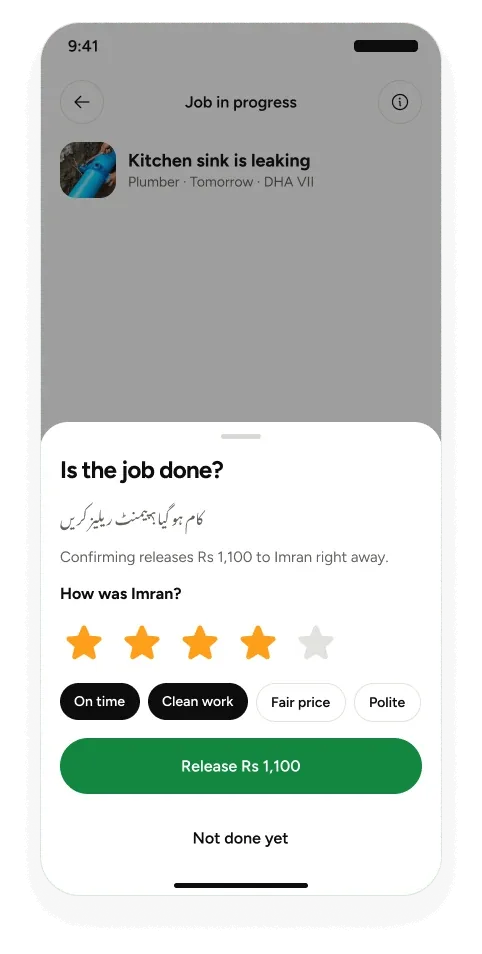
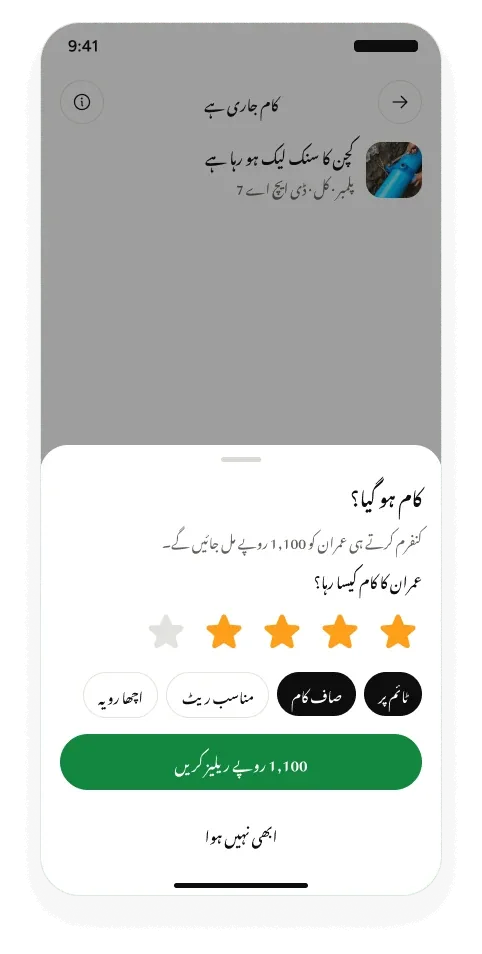
05 Release payment The money waits until the job is done. Confirming releases it and asks for a quick rating.
-
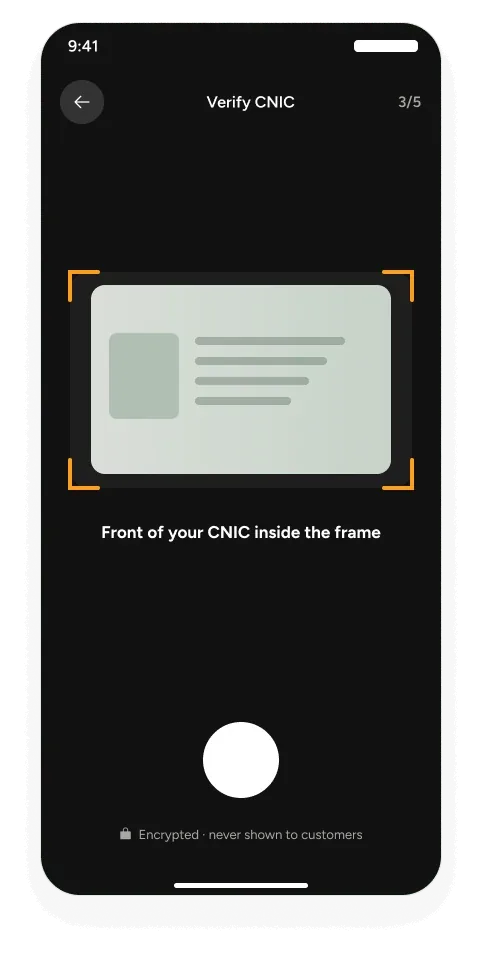
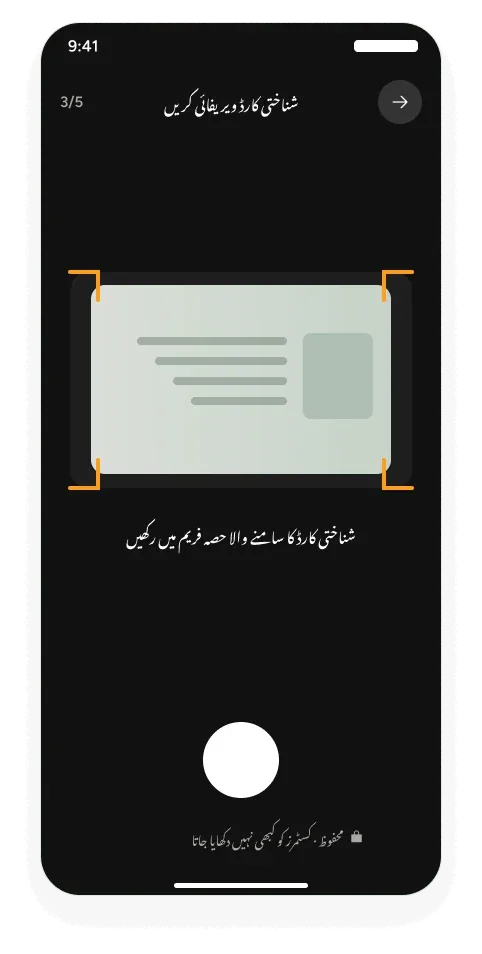
01 Card scan No skipping verification. The card goes in the frame, encrypted and never shown to customers. -
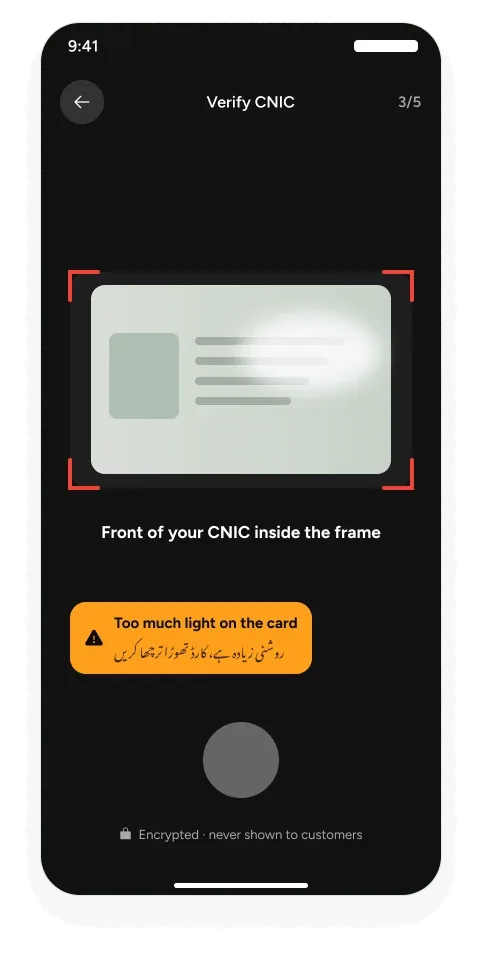
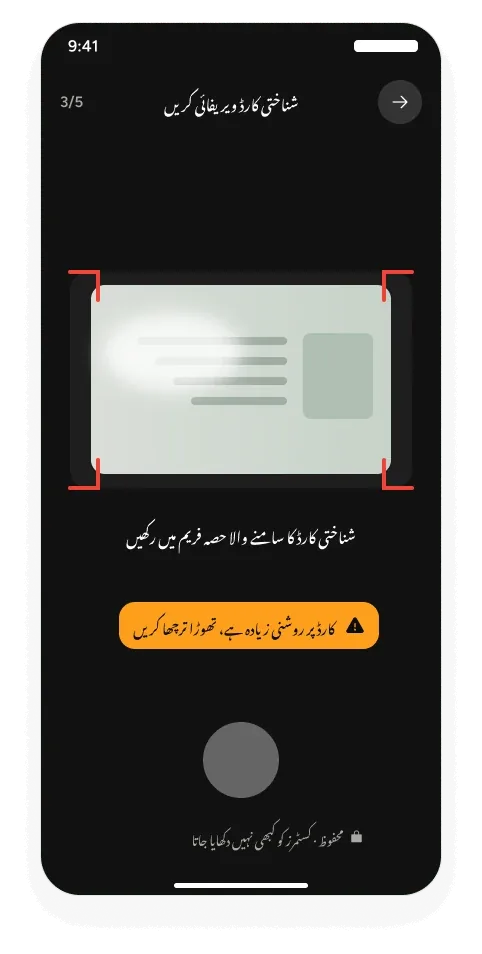
02 Photo not clear The frame turns red and the fix is named in both languages, not a generic error. -
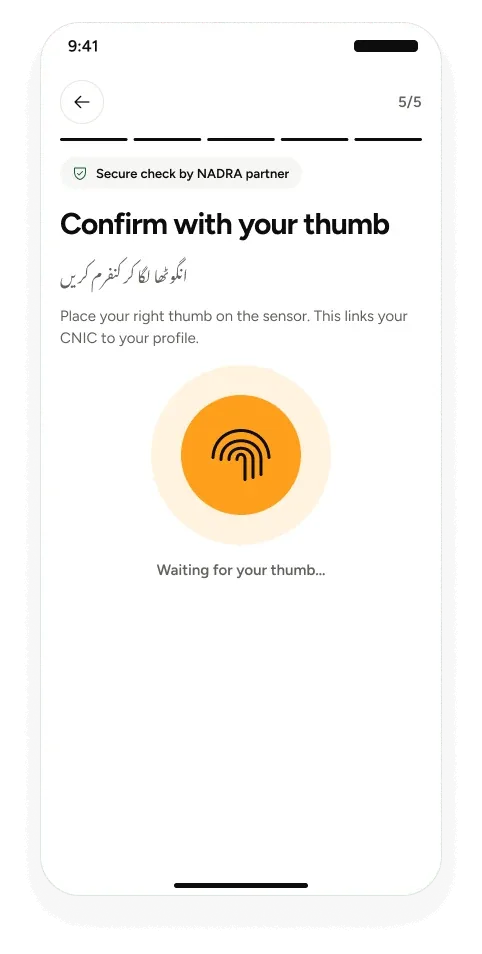
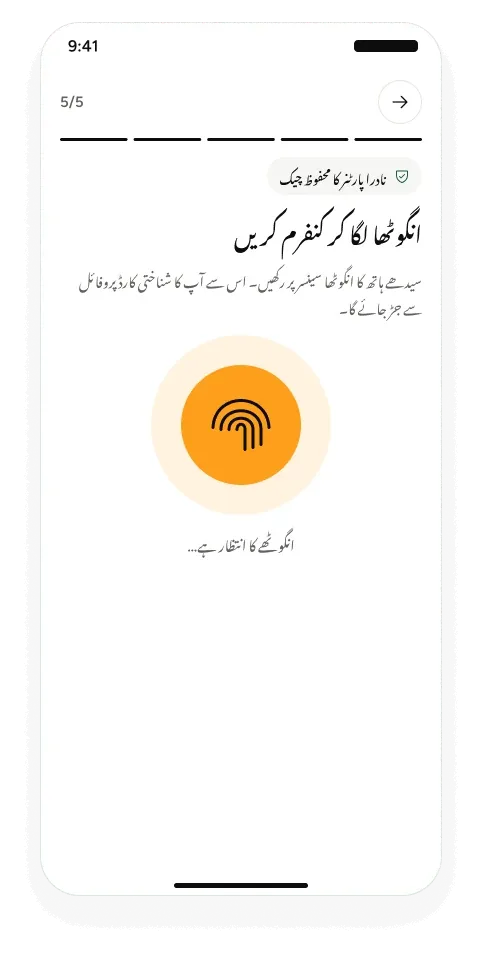
03 Thumb check A thumbprint through a NADRA partner links the card to the profile. -
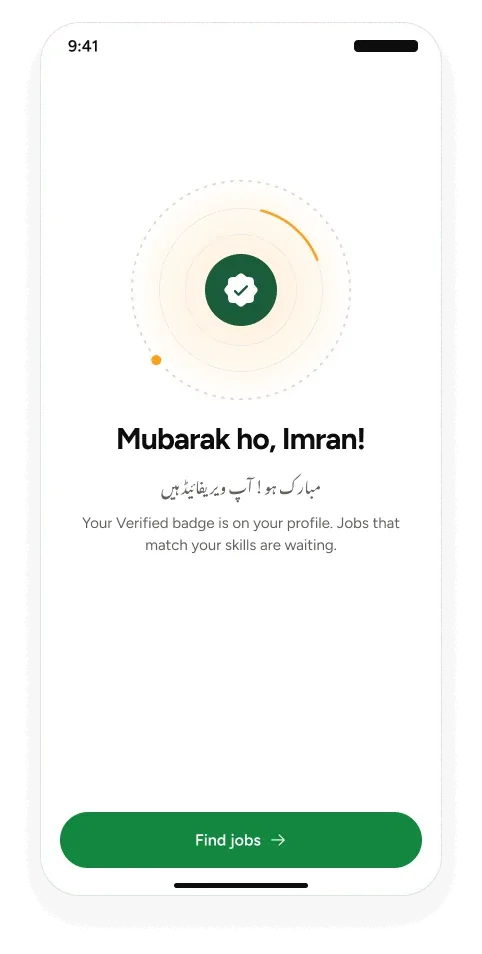
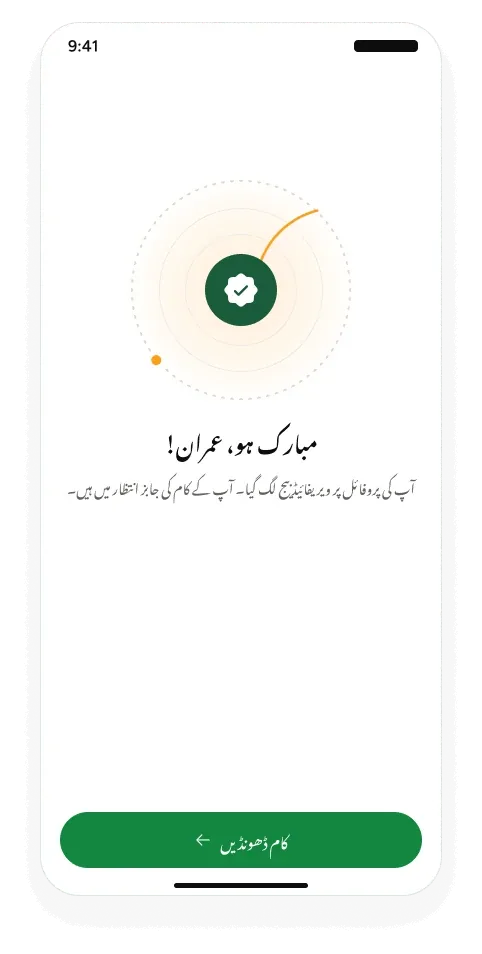
04 Verified Mubarak ho. The badge lands on the profile and matching jobs are waiting. -
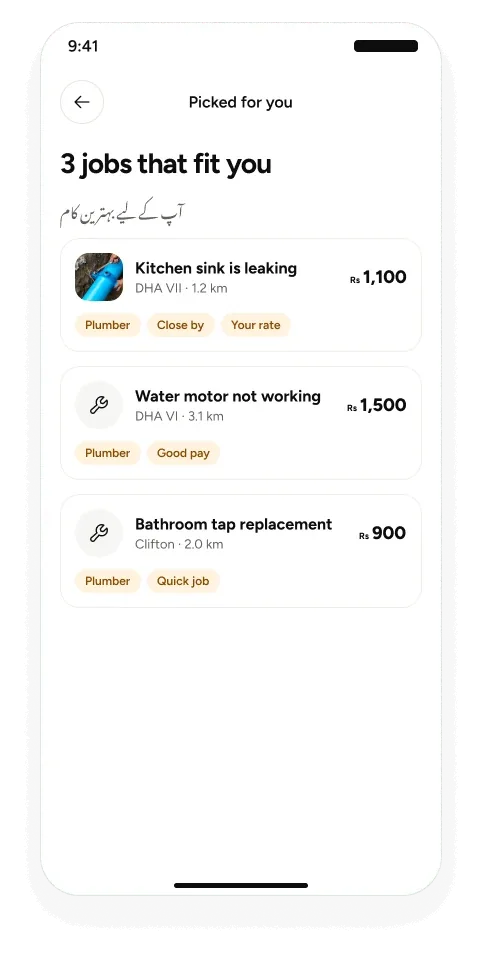
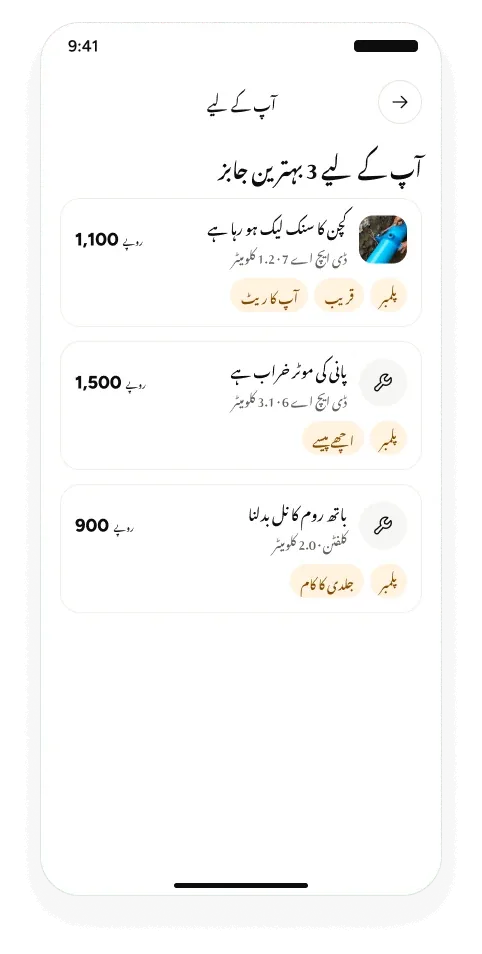
05 Picked for you Jobs that fit the worker's skills, each tagged with why: close by, good pay, quick job.
Re-created for this page. It shows the pattern, with sample data.
Beyond the happy path
The states I check on work like this, because nobody asks for them until they break.
- Wrong codeSays how many tries are left, with a new code one tap away
- Photo not clearNames the fix in both languages
- No internetShows saved information and a retry
- No offers yetSays how many have seen it, then suggests a better price or a photo
- Payment didn't go throughConfirms no money left the wallet, offers another wallet
- Job already takenNothing counts against the worker, with similar jobs to look at
Evidence
- The full app in Figma: eight flows and 47 screens, each in English and in Urdu.
- A style and copy sheet: colour roles, the one decorative motif, and a glossary of formal Urdu next to the words Karachi actually uses.
- An Urdu right-to-left rule sheet for the build team: type sizes, what flips and what stays left to right.
- The wordmark: a handwritten 'is' beside 'Tyme', with a reveal where the 'is' becomes a smile and then a clock.